5 HVAC Noises You Should Never Ignore (and What They Mean)
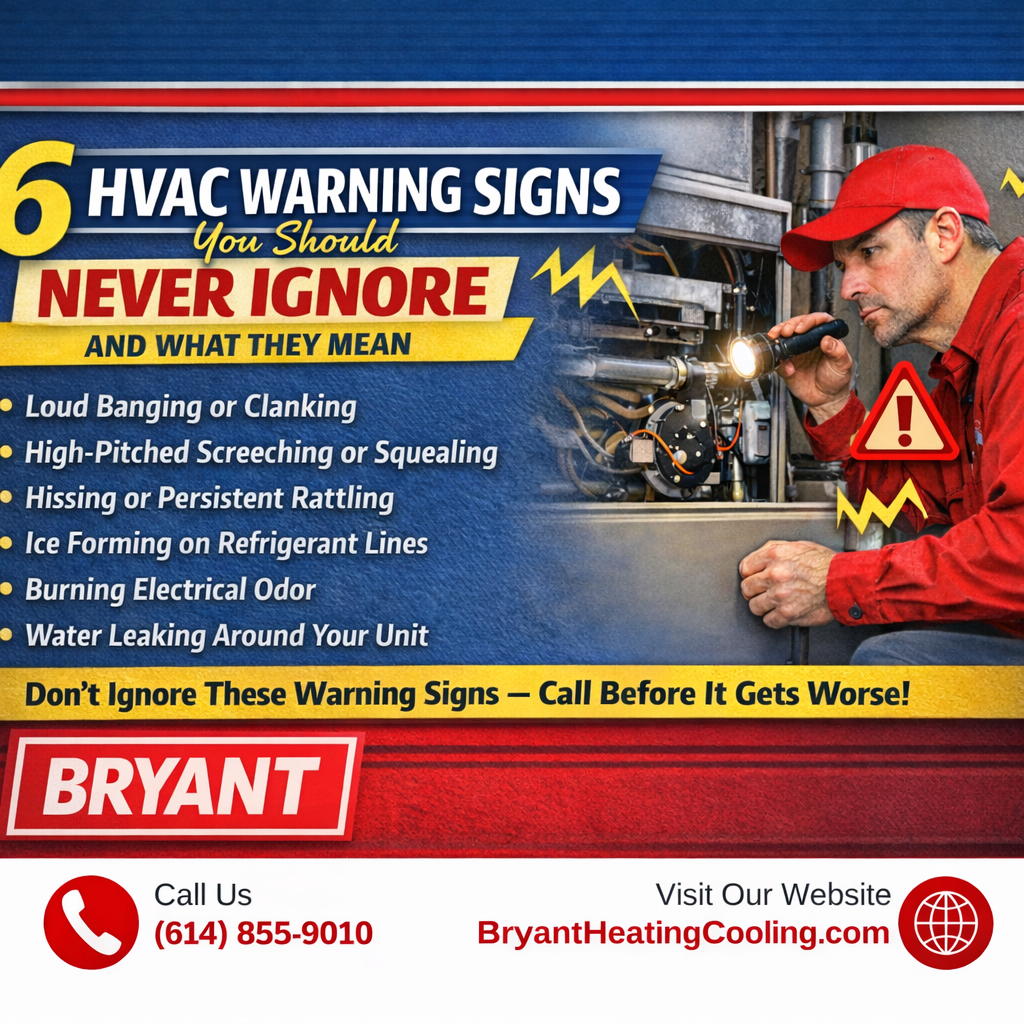
When your HVAC system is working properly, you barely notice it. But if you hear unusual noises, see ice on refrigerant lines, smell something burning, or notice water leaking near your unit, your system may be signaling a serious issue. Heating and cooling account for more than half of a typical home's energy use, and ignoring small warning signs can lead to higher energy bills, system breakdowns, and expensive emergency repairs. Below are the most common HVAC warning signs Central Ohio homeowners should never ignore — and what each one typically means.
1. Hissing from your air conditioner or furnace
A hiss can mean a refrigerant leak, an internal valve malfunction, or excess compressor pressure. Low refrigerant reduces cooling performance and can damage your compressor, so if you hear continuous hissing, schedule HVAC repair right away.
2. Repetitive clicking
A click at startup or shutdown is normal; continuous clicking is not. Possible causes include failing electrical controls, bad relays, or a malfunctioning thermostat. If the system struggles to start or cycles repeatedly, a licensed technician should inspect the electrical components before further damage occurs.
3. Banging, rattling, or thumping
These sounds frequently signal loose or broken parts inside the blower, fan assembly, or motor housing. A minor rattle often becomes a loud bang once a part detaches, which can cause internal damage, motor failure, and higher repair costs. Turn off the system and call a technician if you hear heavy mechanical banging.
4. Humming or vibrating
A light hum is normal; a loud hum or vibration usually means something is struggling — imbalanced motors or blower wheels, loose screws or panels, or overworked electrical components. A loud humming compressor can also indicate declining performance on older units. If the noise intensifies, it may be time to evaluate whether a new air conditioner installation would be more cost-effective than ongoing repairs.
5. Squealing or screeching
Screeching is one of the most urgent HVAC sounds. Typical causes include worn belts, failing motor bearings, or high pressure inside the system. If you hear screeching, shut the system off immediately and contact a professional — these noises often precede a full system shutdown.
Bonus warning sign: ice on refrigerant lines or water on the floor
If you notice ice buildup on copper lines or water pooling near your indoor unit, your system may have restricted airflow, low refrigerant, or a clogged condensate drain line. Ice in summer is never normal, and running the system in this condition can cause compressor damage. Turn the system off and schedule service.
What is the most common source of odd HVAC noises?
Most abnormal HVAC noises come from loose parts, worn components, or a lack of routine maintenance. Over time, vibration and heavy seasonal use cause screws, belts, and internal parts to loosen. Routine maintenance — coil cleaning, electrical checks, and blower inspections — prevents most noise-related issues before they become major repairs. If you're unsure where to begin, book air conditioner repair or an annual tune-up.
Why does my HVAC make a gurgling sound?
A gurgling or bubbling noise can indicate air trapped in the refrigerant line, a low refrigerant level, or a clogged condensate drain line. While not as urgent as a screech or bang, gurgling still warrants a service call — early detection keeps repairs affordable and prevents long-term cooling problems.
Preventative steps for a quiet, efficient system
- schedule seasonal HVAC tune-ups
- replace air filters every 1–3 months
- keep the outdoor unit free of debris
- make sure vents and registers remain unblocked
- monitor your thermostat for irregular cycling
For more guidance, ENERGY STAR's HVAC maintenance tips outline simple steps homeowners can take to maintain efficiency.
Frequently asked questions
What should I do if my HVAC system is making a loud buzzing noise?
A loud buzzing noise often indicates an electrical issue such as a failing capacitor, loose wiring, or a relay problem. Turn the system off immediately to avoid safety hazards and schedule professional HVAC repair in Columbus as soon as possible.
Can I fix HVAC noises myself?
Homeowners can perform basic maintenance such as changing filters and clearing debris. Internal mechanical or electrical noises require a professional HVAC technician.
Is it safe to run my HVAC if it smells like burning?
No. Shut it off immediately. An electrical burning odor can indicate wiring failure or a motor issue and should be inspected by a professional.
Why is my AC freezing up in summer?
Low refrigerant or restricted airflow are the most common causes. Running the unit while frozen can permanently damage the compressor, so turn the system off and schedule service.
Need HVAC repair in Columbus, Ohio?
If your HVAC system is making unusual noises, leaking water, freezing up, or giving off burning smells, don't wait for a complete breakdown. Bryant Heating, Cooling & Refrigeration — serving Columbus and Central Ohio since 1995 — provides same-day HVAC repair (when available), licensed and insured technicians, service for all makes and models, and emergency repair options. Call (614) 855-9010 or schedule service online. Your HVAC system rarely fails without warning, and unusual noises are some of the most important signals to pay attention to — addressing problems early protects your equipment, improves efficiency, and prevents costly breakdowns. We proudly provide HVAC repair and installation in Columbus, Westerville, Gahanna, New Albany, Blacklick, Pataskala, Newark, Granville, and surrounding Central Ohio communities.